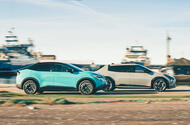
The C-segment SUV is critical in Europe, but cost pressures preclude EVs from competing with ICE
The rise of the C-segment SUV has been remarkable. The C-segment is right in the middle: bigger than A (city car) and B (supermini) but not as voluminous as E or F.
This has always been the heart of the market, with cars like the Ford Focus and Volkswagen Golf catering for family buyers for years. But then came the family friendly SUV, pioneered by the likes of the Nissan Qashqai, and now it's far and away the biggest segment.
It accounts for around one in five of all cars sold in Europe, where the VW Tiguan is still king. In the UK, it's more than one in four, led by the Kia Sportage. Buyers can choose from around 100 models across Europe. Meanwhile, the non-SUV C-segment is shrinking.Â
Car makers prefer an SUV because, frankly, customers prefer an SUV. They will pay more for them and that little bit extra helps when every percentage point of profit margin is fought over.
The problem for European car firms is how to profitably electrify the C-segment. These cars are sometimes described as compact but that belies their do-it-all use case. They are often the sole family car so battery versions have to offer a long range. That in turn means a lot of cells with the most expensive, nickel-manganese-cobalt chemistry. With the pressure to localise Europe's battery industry, those cells are sourced not from inexpensive China but right here in Europe, where costs are among the highest.
This is in contrast to small SUVs, where new European electric models are more likely to use lithium-iron-phosphate (LFP) batteries sourced from China and range is not so key. The C-SUV segment is so big you have to offer electric or risk not hitting your ZEV mandate targets in the UK or average CO2 figures in the EU.
Even the size of the market doesn't guarantee you'll sell enough to activate the cheapest supplier prices because, well... [gestures to that 100-ish models figure].  And it doesn't help that the C-SUV is a Chinese speciality, along with the cheaper, LFP battery.
Every week, it seems we're hearing about a new Chinese entrant. Just to be able to compete means losing hundreds of pounds on each compact EV. Government incentives help. But until European battery makers can lower the cost of cell making, C-segment electric SUVs will remain one of the industry's biggest financial black holes.