Billion-dollar baby: This famously expensive to develop Alfa is now enticingly cheap to own
Unbelievably, it has been more than a decade since Alfa Romeo revived the Giulia name for its achingly pretty junior executive saloon, the first of just two models to use the billion-dollar Giorgio platform that took mass-produced Alfas back to rear-wheel drive for the first time since the 1980s and made them fantastically engaging to drive.
Alfa recently confirmed the car will remain in production until 2027 while the firm reconsiders its plans for an EV-only successor, which is good news in our book - and even better, you can now buy one of these thoroughbreds for less than a new Dacia Spring, while a 503bhp V6 Quadrifoglio version is attainable for no more than a mid-spec Duster.
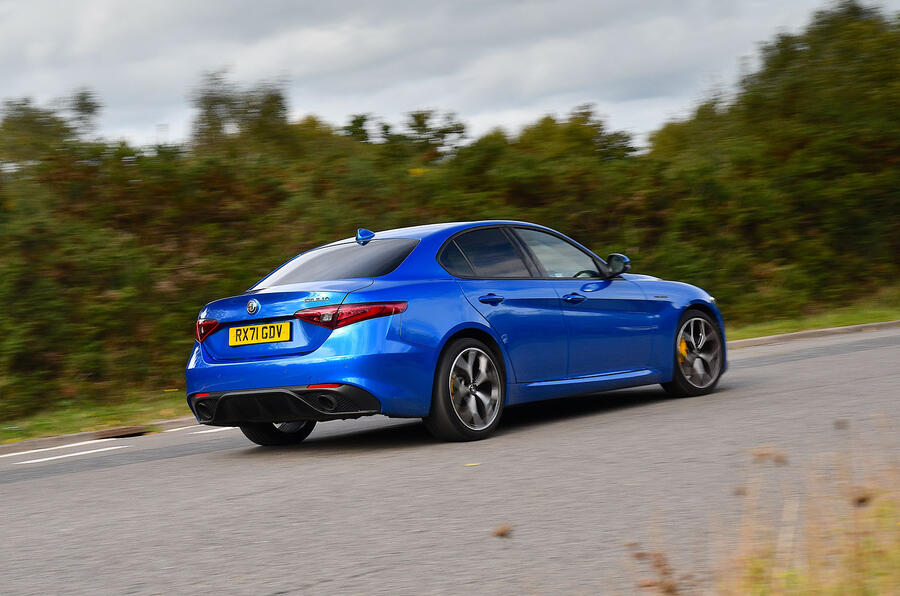
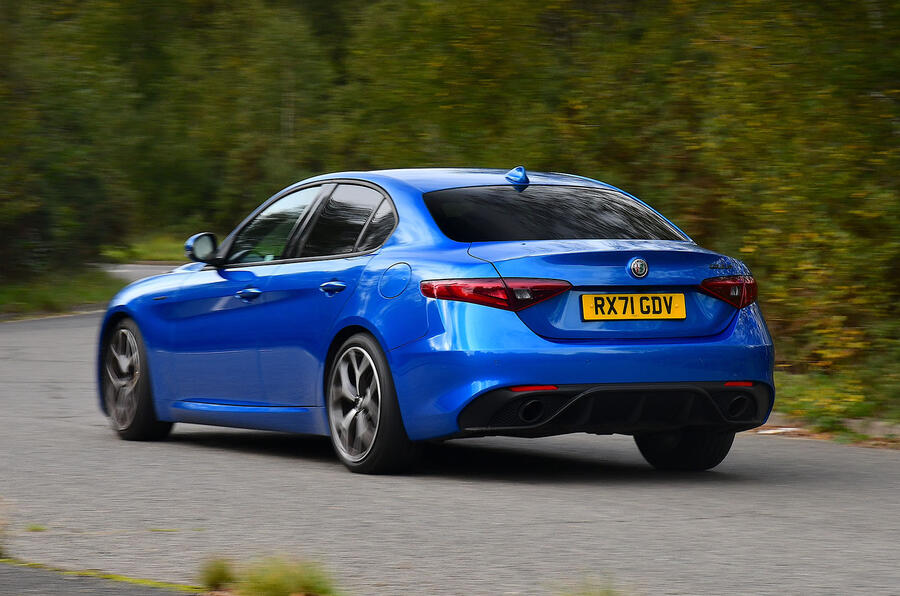
Despite never having received a proper facelift, the Giulia hasn't become any less alluring. Model-year updates have adjusted the bumpers and changed the colour palette and a slightly slicker tri-LED headlight motif was added in 2023, but Alfa has never felt the need for stylistic revolution, so even the earliest cars still look fresh.
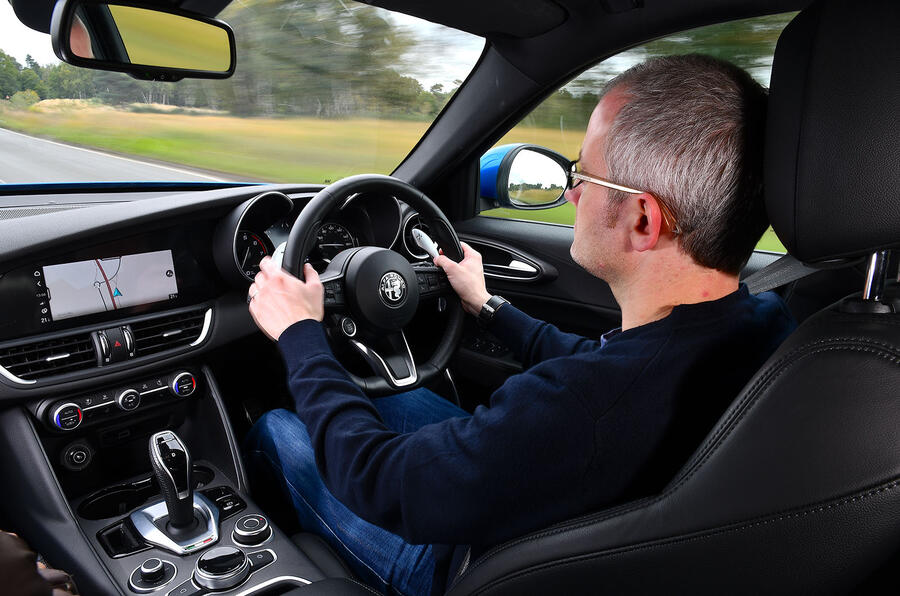
Alas, the same is not true of the cockpit. Back in 2016, we found the interior of the Giulia unimpressive: the material quality lagged behind the Audi A4's and the infotainment system was trickier to use than the BMW 3 Series'. But with time the Alfa's cabin improved.
The 8.8in media screen is neatly integrated into a dashboard that swoops over the easy-to-read dials in front of the driver (swapped for a 12.3in digital cluster in 2023) and there are physical controls for almost everything. An intuitive rotary dial for the infotainment is a very welcome throwback (although touch control was added in 2020).
The steering wheel is pleasingly round and narrow-rimmed, while the tactile column-mounted metal gearshift paddles are a joy to use.
Most Giulias are fitted with a 2.0-litre turbo petrol four with either 197bhp or 276bhp. It's a fine engine, with enough firepower for a 1500kg car and reasonably economical (expect 35-40mpg on a run). Hitting 62mph will take between 5.7sec and 6.6sec.
The four-pot's distinctive character pairs extremely well with the chassis - one of the best ever to underpin a 'normal' car.
The Giulia manages to be at once impressively comfortable and refined and fantastically agile and responsive, with its composed body movements and communicative steering inspiring confidence in the corners and allowing for beautifully controlled fun. The steering is among the finest you will experience in a saloon, giving lots of feedback, and the throttle and brakes are calibrated nicely too.
For the less dynamically inclined, there was a motorway-oriented 2.2-litre diesel four. It's reasonably refined, delivers ample power in a linear fashion and is capable of 60mpg on a run. Lower-spec cars had an adequate 148bhp (158bhp from 2019), while range-toppers got 177bhp (187bhp from 2019).
All UK models are rear-wheel drive exclusively and feature a ZF eight-speed automatic gearbox.
We would steer clear of the base model and opt for a better-equipped Super, or even a stylish Speciale or Veloce. But whatever your selection, you will find the Giulia is far better at making an occasion of everyday driving than its contemporaries and much more likely to make you look back as you walk away from it in the supermarket car park.
As for the cherry on top? This is one Alfa that seems to be holding up pretty well in the reliability stakes, too.
What to look for:
Electrics: Early right-hand-drive cars seemed to suffer water ingress in the ECU. This caused a lot of expensive problems, but it should be solved by now. Faulty warning lights and intermittent sensor failures have been a recurring problem, however, including a frustratingly sensitive alarm.
Infotainment: The screen is prone to freezing in early cars, although a simple reboot should fix things. Apple CarPlay and Android Auto were added from 2020, albeit only wired. It can be installed on 2018 and 2019 cars by an Alfa dealer.
Suspension: Suspension-related noises and brake faults have been reasonably common, although Alfa has often had the goodwill to replace them at a reduced cost even out of warranty if they're due prematurely.
Engine: Loose hose clamps on the coolant pipes can lead to leaks, overheating and worse. Check there are no unusual noises from the fuel pump and that the turbo isn't producing blue smoke.
Insurance: Groups begin at a reasonable 22 but rise to 44 for the Quadrifoglio. Annual VED comes in at £620 until the fifth year of registration, when it drops to £195. Early diesels cost just £35 to tax, however.
Also worth knowing:
If we were on the hunt for a Giulia, we would be after the adaptive dampers, limited-slip differential, Harman Kardon sound system, sunroof, sports seats and metal shift paddles.
The Quadrifoglio's 2.9-litre twin-turbocharged V6 with 503bhp at launch, later 513bhp makes a fantastic noise as it revs to a 7400rpm crescendo. Note, however, that cars made from 2020 have a particle filter (GPF) in the catalytic converter that subdues the noise, even with the optional Akrapovic exhaust. The Quadrifoglio has a far patchier reliability record than the regular Giulias, however.
There have been continual model-year updates for the Giulia, so go for as late a car as you can afford. Note that model years don't quite correlate to actual years, so check the small print before you buy.
Euro NCAP awarded the Giulia a five-star safety rating in 2016, with an adult protection score of 98%.
An owner's view:
Mike Jones: "I swapped my BMW 3 Series for a Giulia Veloce in 2019, drawn by its stunning looks and promise of Italian flair. I haven't been disappointed. The steering is fantastic and the chassis balance is sublime. I rate it more than the BMW. The interior isn't quite as plush, and the infotainment was a bit laggy until a software update sorted it. The driving position is spot on and the seats are fantastic. Reliability has been surprisingly good: just regular servicing needed 50,000 miles in."
How much to spend:
£8000-£14,999 Mostly early, low-spec cars, with a smattering of higher-spec, high-mileage diesels.
£15,000-£27,999 Where the bulk of used Giulias sit. A good selection of high-spec petrols and some late diesels.
£28,000-£49,999 Early Quadrifoglios with 50,000-plus miles and later four-cylinder petrols with the tri-LED motif.
£50,000 and above From brand-new special editions to 2023 Quadrifoglios with the extra power and new lights all the way up to fully loaded, delivery-mileage Quadrifoglios.