
Recent Updates
06/08/2026 12:00 PM
Setting sun: Japan's car makers deprioritise Europe as China races in
06/08/2026 12:00 PM
What actually is a car platform, anyway?
06/08/2026 12:00 PM
The best ever shooting brakes
06/08/2026 12:00 PM
If Porsche's GT boss likes virtual gearshifts, you can too
06/07/2026 12:00 PM
Inside the Leapmotor-Stellantis deal that's changing the car world
06/07/2026 12:00 PM
My 1992 V8 Range Rover only costs me £100 in repairs each year
06/07/2026 12:00 PM
The rise of the virtual gearbox: Why EV sports cars are faking it
06/07/2026 12:00 PM
The finest cars of Buick
06/07/2026 12:00 AM
How the Daewoo Matiz began life as a Fiat concept
06/07/2026 12:00 AM
The world’s coolest police cars
EV, Hybrid, Hydrogen, Solar & more 21st century mobility!
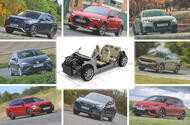
Volkswagen's MQB is among the most prominent platforms, spawning a variety of modelsThe word is commonly used in automotive circles, yet its meaning isn't widely understood – and is highly variable
One thing the car industry is renowned for is jargon – and the problem with jargon is that terms can be interpreted differently depending on who's using them.
Electric vehicles' traction motors are an example. Are those that avoid the use of permanent magnets separately excited synchronous motors or externally excited synchronous machines? You choose, because the industry has never been good at agreeing standards.
The term 'platform' is another example. In the past decade it has emerged from being a relative rarity in automotive chat to being as common as those old favourite phrases 'unsprung weight' and 'power-to-weight ratio'.
In fairness, there's a reason why 'platform' and its stablemate 'architecture' are so widely used now, and that's because both methods of engineering design are applied to the majority of mainstream cars today. The difference between the two can get a little fuzzy, and perhaps that's because they are so closely linked, but using both approaches as a foundation to underpin the building of cars not only allows manufacturers to do so profitably but in theory should also result in better cars.
One senior engineer described the difference between the two like this. An architecture shares the same approach to designing and manufacturing components like structures, powertrains and chassis (a common bill of design and process in engineering speak). On the other hand, a platform can be described as having common underframe, chassis and powertrain elements capable of residing beneath multiple "top hats", or bodystyles.
So, for example, two platforms – those for saloons and SUVs, say – might be built using the same architecture. Or, to turn that around, a single architecture can spawn more than one platform – those for saloons and crossovers, say.
In 2012, Jaguar Land Rover's D7a architecture did just that, providing the foundation for a family of completely different vehicles under two different brands: Jaguar's XE and XF and Land Rover's Range Rover Velar are examples.
Platforms aren't new, but they are more flexible and a powerful tool for manufacturers to use and share. Historically, it could mean simply sharing a floorpan and chassis, like the Volkswagen Karmann Ghia being based on the Beetle. Most of the industry's big names have used and shared platforms in Europe, Japan and America in similar ways over the years.
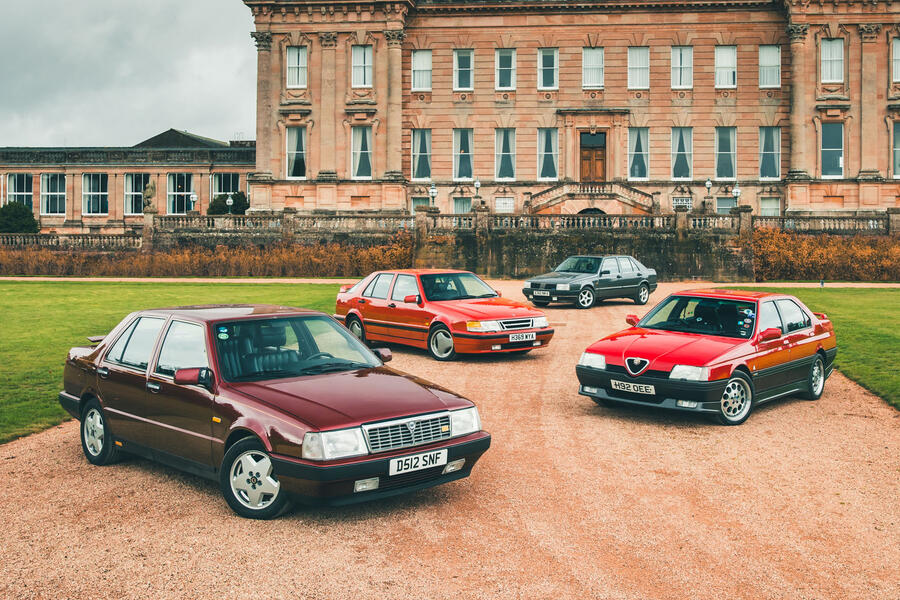
In Europe during the 1980s, a prime example of 'platform sharing' was Fiat's front-wheel-drive Tipo Quattro platform, which underpinned the Fiat Croma, Lancia Thema, Saab 9000 and Alfa Romeo 164. Although the wheelbases of the four cars were the same, other aspects were quite different, especially the powertrains, from Saab's four-cylinder turbo to Ferrari's V8 (in the Lancia), so this was far from a 'badge engineering' exercise.
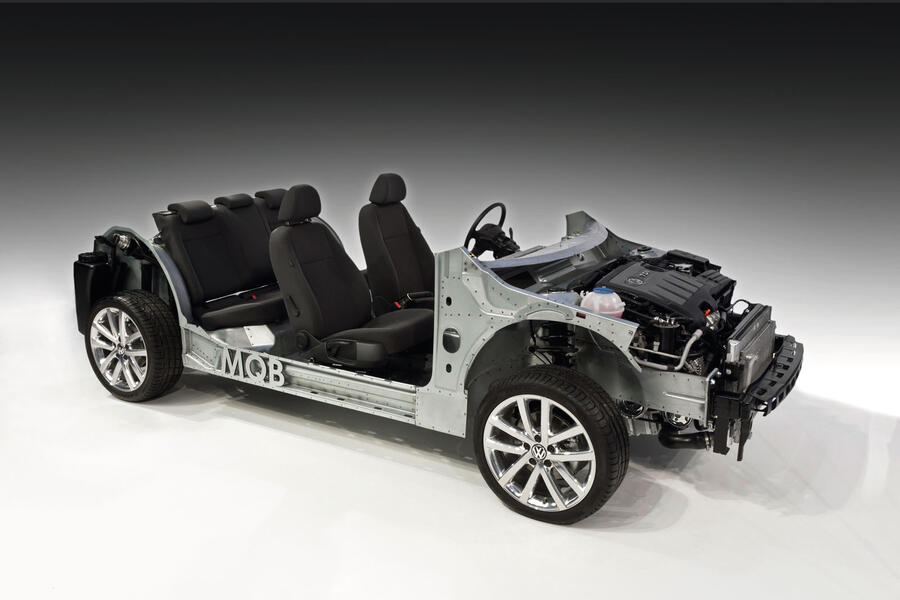
Since then and especially over the past decade, platforms have developed considerably in sophistication. It's more than a decade since Volkswagen introduced its Modular Transverse Matrix, or MQB. 'Modular' is another buzzword used frequently now but easier to fathom than 'platform' or 'architecture'. It underlines the fact that modular platforms and the sizes of the cars they underpin can be changed by having a choice of basic components that are interchangeable, like centre sections that are longer to extend the wheelbase or the rear floor to carry a hybrid battery. In that sense, like a child's construction kit, different cars can be constructed by selecting alternative key components from the toolbox that is a modular platform.
There are limits, though: while a centre section or tail section dimension can be altered, there must be constraints, like the distance from the accelerator pedal to the front axle line in the case of the MQB. This is to accommodate a range of engines that all have the same major dimensions and form part of the same platform, whether petrol, diesel or hybrid.
What became pretty obvious fairly rapidly (and in truth had been all along) was that EVs would require their own architectures and platforms. If a car isn't going to have a combustion engine, fuel tank or exhaust system, what's underneath everything that we see can be very different. Four-wheel drive can easily be accomplished by fitting an electric motor at both ends, and today's two-wheel-drive EVs are either front- or rear-driven anyway. Batteries are easy to fit under—or, better still, as part of—the floor.
It's easy to see how perfectly electric powertrains with essential components like inverters integrated into the electric machines that drive the car lend themselves to dedicated, electric-only, modular platforms, and that's what has happened.
Volkswagen's Modular Electric Drive Toolkit, or MEB, followed the MQB. It was designed for rear-motor, rear-wheel drive and the option of a front motor giving four-wheel drive. In between the two it is flat, a battery forming the floor and a passenger compartment free of humps. It has since been shared with Ford, as well as other Volkswagen Group brands, such as Audi and Skoda, for which it was always intended.
Stellantis has taken a more cautious approach with its range of STLA-branded platforms: Large, Medium, Small and Frame (the last one being for pick-ups and commercial vehicles). Although they are billed as 'BEV-by-design', the company qualifies that with the phrase 'multi-energy', meaning it supports hybrid drive as well — so not quite the unequivocal approach taken by others, like the Hyundai Group's E-GMP platform and Volvo's new SPA3 platform beneath the EX60.
What we have covered so far is really the mechanical side of platforms: how they have become modular, comprised of a series of building blocks using both body and powertrain parts from a pre-designed and pre-manufactured toolkit. But we hear the word 'architecture' a lot as well in terms of electrics and electronics. EVs' electrical architectures are described as 400V, 800V or both, and in this case, although 'architecture' relates to components and their functions, the higher voltage allows smaller cable sizes, reduced weight and faster charging.
You will notice that these two are also referred to as 'platforms', to describe the basis on which a car is built. For infotainment system architecture it's a similar story, because the term refers to both hardware and software. Infotainment systems have moved from individual components like 'a radio' or 'a CD player' to sophisticated networks with centralised controllers incorporating stuff like entertainment, navigation, vehicle controls and more.
The latest is probably the 'software-defined vehicle' where, for example, electronics control the character of a chassis and how a car drives, rather than traditional hardware components. Component supply giant ZF says its CubiX software platforms represent a "paradigm shift in chassis development", because where engineers have used components to define the characteristics of a car's chassis, now it's the other way around. Electronic functions will control the way the chassis behaves by controlling components. The software platform isn't tied to any particular hardware either and can be used with third-party components as well as ZF's.
As more and more aspects of a car move to drive-by-wire, these centralised electronic control platforms are likely to play a much bigger role in a kind of overarching 'plug and play' scenario that will make car manufacturing and sophistication unrecognisable from just a couple of decades ago.
Some platforms you should know
Volkswagen Group Modularer Querbaukasten
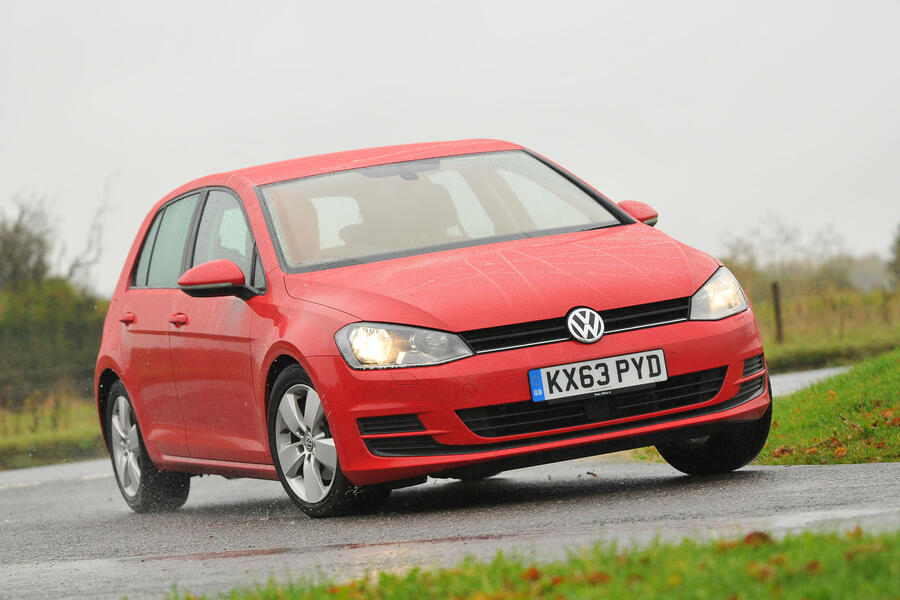
The Volkswagen Group spent an estimated £50 billion developing the MQB platform and the first vehicles to use it, led by the fabled Mk7 Volkswagen Golf of 2012. It was money well spent: the hugely modular platform enabled the company to strip away vast swathes of production complexity and has been used for more than 70 different vehicles of hugely varying sizes across its various brands. To date, more than 32 million cars have been built using the platform.
Key models:Â Volkswagen Golf, Seat Ibiza, Audi TT, Volkswagen Tiguan, Skoda Superb, Skoda Kodiaq, Cupra Formentor
Renault-Nissan Common Module Family
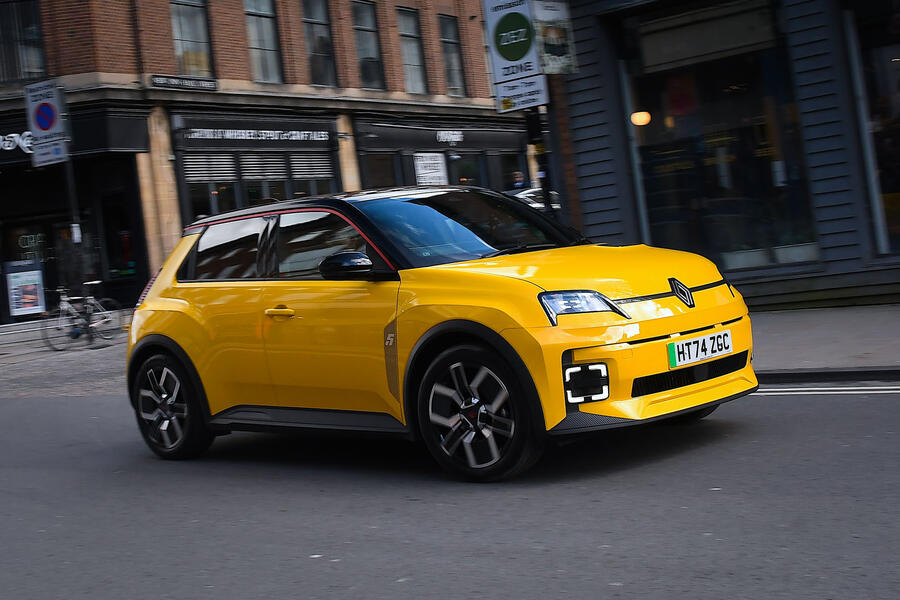
Introduced in 2013, when the Renault-Nissan Alliance was in its pomp, the CMF is actually a family of platforms, ranging from CMF-A (used for A-segment cars such as the Renault Kwid) to CMF-C/D (used for the Renault Rafale, Nissan Qashqai and many more). There are also two electric versions: CMF-B EV (used for the likes of the Renault 5 and Nissan Micra) and CMF-EV (used for the Renault Megane E-Tech and Nissan Ariya). Renault took the lead on developing the CMF-B EV, with Nissan focusing on the CMF-EV. There's also plenty of confusion about the names of those platforms: Renault renamed them Ampr Small and Ampr Medium respectively but has now changed that to RGEV Small and RGEV Medium, while Nissan still uses their original titles.
Key models: Renault Clio, Renault 5, Nissan Juke, Nissan Qashqai, Mitsubishi Outlander, Renault Scenic E-Tech, Alpine A390
STLA Medium
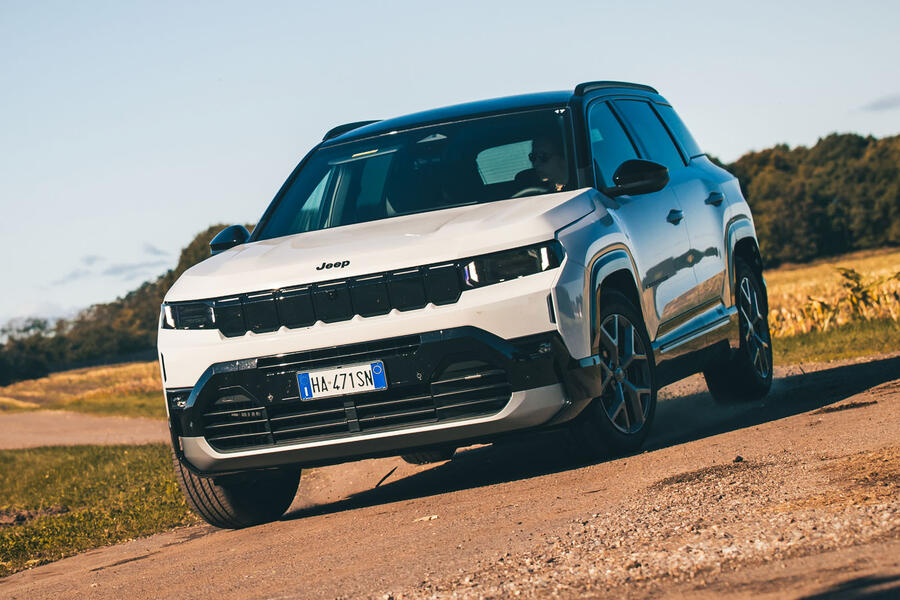
Stellantis has four main platforms for its multitude of brands, labelled STLA Small, STLA Medium, STLA Large and, for pick-up trucks and commercial vehicles, STLA Frame. The core of its European line-up sits on the electric-first STLA Medium, which has its roots in the Efficient Modular Platform 2 (EMP2) that was developed by the PSA Group and launched in 2013. The STLA Medium is designed for the C- and D-segments, in which Stellantis sells more than 20 models—part of the reason it can produce up to two million vehicles on the platform each year. In electric form, the STLA Medium can accept two different battery sizes and front- and four-wheel-drive powertrains.
Key models: Peugeot 3008, Vauxhall Grandland, Jeep Compass, DS N°7